In the village of Nawan Kot near Mehmunwali in Sheikhupura, Punjab, lives Shabana Mubarak, a woman whose determination turned a difficult chapter of life into a story of strength and independence. Her journey shows how vocational training for women in Pakistan can create real opportunities for families who are struggling for financial stability.
Shabana is a mother of four children. For many years, her husband remained the only bread earner for the entire family. Life changed unexpectedly when he became seriously ill and could no longer work. They had no stable source of income, and the responsibility of her children made Shabana realize the need to face an uncertain future.
Like many women living in rural communities, Shabana wanted to support her family but had limited opportunities to earn. She had never received professional training and did not know where to begin. What she did was her absolute determination and the hope that somehow she could improve her family’s situation.
An opportunity came when her siblings told her about the Moawin Foundation Vocational Training Institute (VTI) in Mehmunwali village. As part of its Skill Development Program, the center provides free vocational training for women and youth, enabling them to learn practical skills that can lead to employment or small businesses.
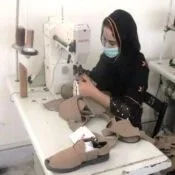
Curious and hopeful, Shabana visited the training center and decided to enroll in the Dressmaking and Stitching course. For the next six months, she dedicated herself to learning the craft of tailoring.
During the training, she gained hands-on experience in sewing techniques, garment stitching, and fabric handling. The program not only helped her develop technical skills but also gave her the confidence to believe that she could earn an income through her own work.
After completing the course, Shabana made an important decision. Instead of looking for work elsewhere, she decided to use her new skills to start a small business from home. With limited resources but strong determination, she set up a small stitching setup inside her house and began offering tailoring services to people in her village.
The early days were not easy. At first, customers were few, and building trust in a community takes time. But Shabana remained patient and focused on delivering quality work. Slowly, word about her stitching began to spread, and more people started bringing their clothes to her for tailoring.
Over time, her dedication paid off. Her home-based stitching work gradually turned into a steady source of income. Her earnings helped her manage household expenses and support her family during a very difficult period. She was able to contribute to her husband’s medical treatment and ensure that her children could continue their education.
Unfortunately, her husband passed away. The loss was deeply painful, but by that time, Shabana had already become the main support for her family. Today, Shabana earns around 25,000 PKR per month through her stitching work, allowing her to provide for her children and run her household independently. What began as a simple training opportunity has now become a sustainable livelihood.
Shabana’s journey highlights the importance of vocational training for women in Pakistan, especially in areas with limited jobs. By offering training in practical trades such as stitching, tailoring, beautician, food dehydration, and other market-relevant skills, Moawin Foundation helps women turn learning into real economic opportunities.
For many women, these skills become the first step toward financial independence. Home-based businesses allow them to earn while staying close to their families and contributing to their local communities.
Today, Shabana Mubarak’s story inspires other women in her village. Her journey shows that with the right opportunity and determination, it is possible to overcome hardship and build a better future.
She remains deeply thankful to Moawin Foundation for providing the training that helped change her life. Her story shows that empowering women with skills creates a more secure future for families and communities.