

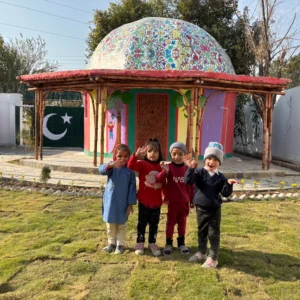
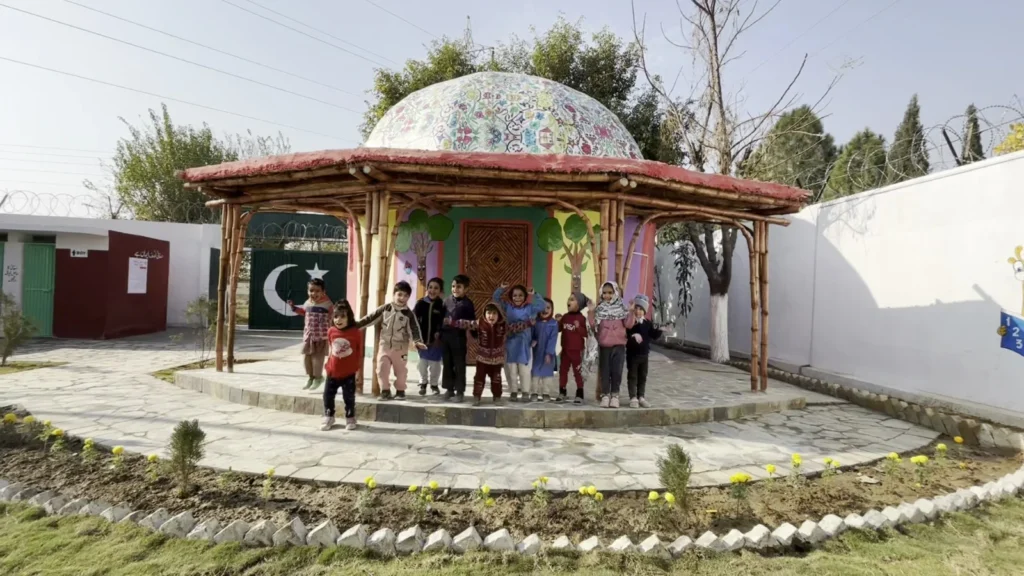
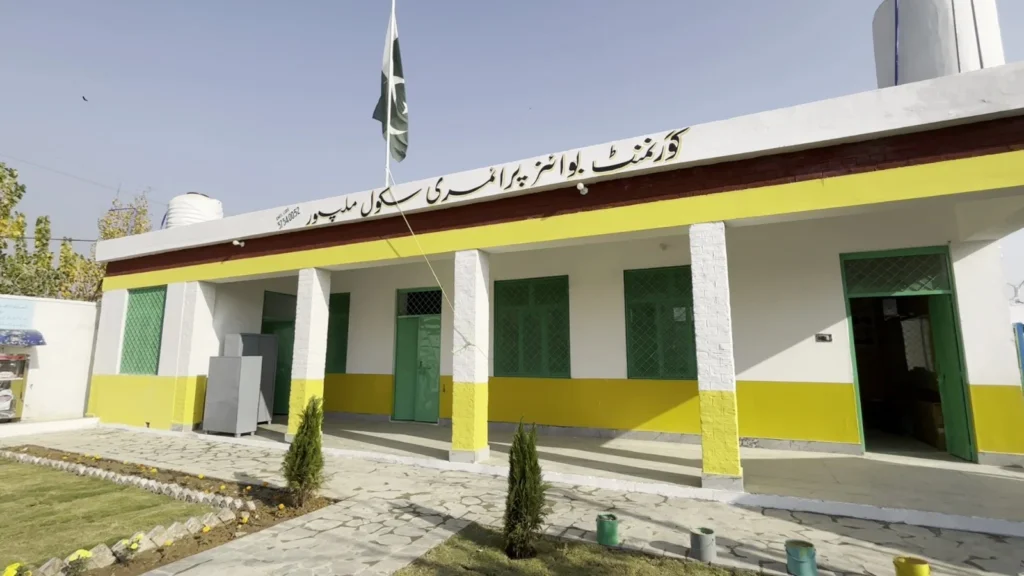
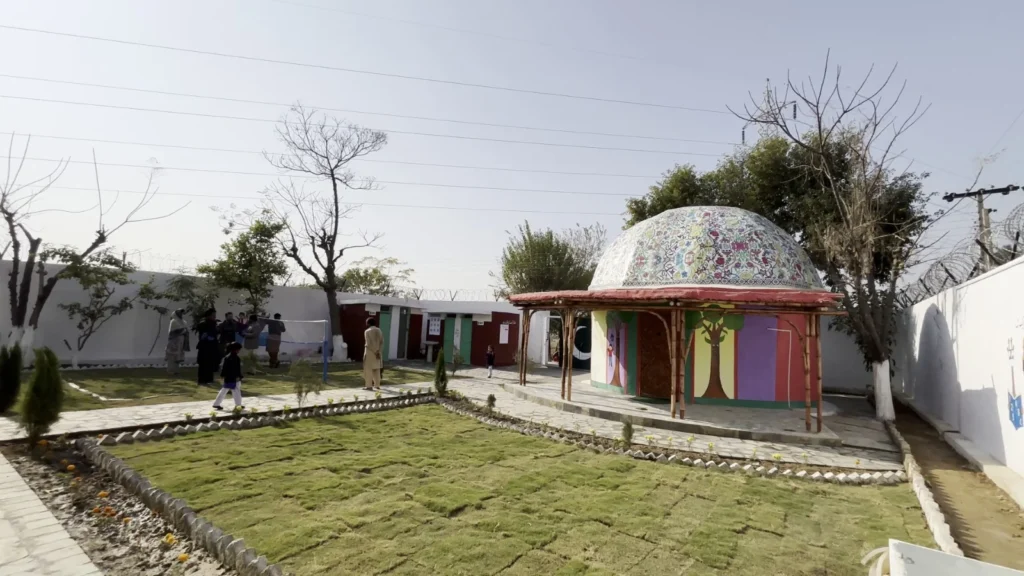
Moawin Foundation has constructed Pakistan’s very first eco-friendly, sustainable classroom in Mallpur, Taxila. This pioneering achievement was led by Moawin Foundation and developed in collaboration with the Punjab Education Foundation (PEF) and supported by the Hashmi Foundation. This groundbreaking project reflects Moawin Foundation’s commitment to integrating sustainability into education and introducing eco-friendly spaces to underserved communities.
This new classroom marks a pioneering effort as no other foundation or educational institution in Pakistan has previously built a zero-carbon, bamboo-structured, climate-resilient learning space designed specifically for young students. Encouraged by its success, Moawin Foundation aims to replicate this model across all its adopted schools and incorporate eco-friendly classrooms into future school projects.
Education Meets Climate Responsibility
Pakistan remains one of the countries most vulnerable to climate change, facing unpredictable weather patterns, rising temperatures, and frequent floods. According to the Global Climate Risk Index, Pakistan consistently ranks among the nations most affected by extreme environmental events.
In such a context, integrating sustainability into the school system is no longer optional; it is essential. Eco-friendly classrooms reduce carbon emissions while educating children on environmental responsibility, conservation, and climate awareness from an early age.
A Model for Sustainable Learning
With technical support from the Heritage Foundation, the classroom was designed by Yasmeen Lari, Pakistan’s first female architect and a global leader in low-carbon, environmentally responsible construction. Her zero-carbon bamboo design combines innovation, cultural relevance, and climate resilience.
What Makes This Classroom “First of Its Kind” in Pakistan?
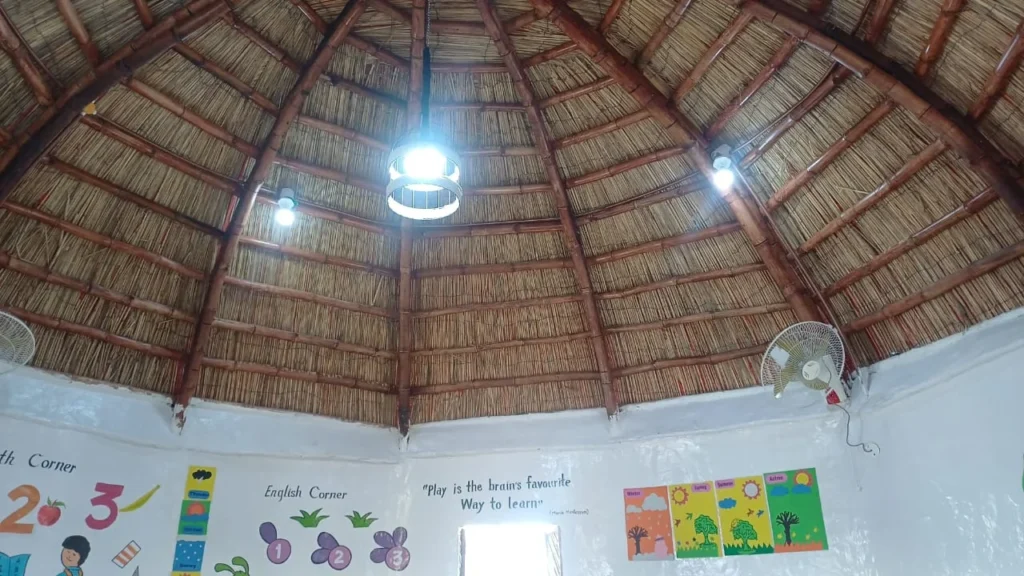
- A durable bamboo structure built with low-carbon, natural materials
- Zero-carbon design aligned with modern global sustainability standards
- Natural ventilation and lighting, reducing reliance on energy
- Weather-resilient construction, suitable for diverse climates
- Energy-efficient fittings to minimize environmental impact
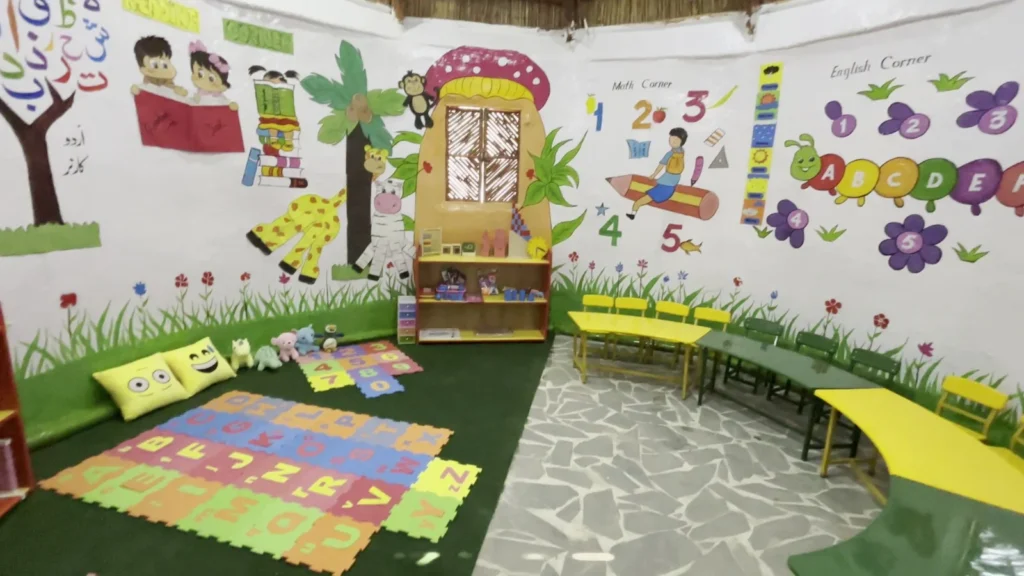
- A complete Early Childhood Care and Education (ECCE) setup with interactive learning tools
This innovative model demonstrates how eco-friendly infrastructure can transform schools into healthier, more inspiring learning environments.
Leaders Commend the Initiative
The inauguration ceremony brought together leaders and partners who played vital roles in bringing the project to life:
- Barrister Khurram Hashmi, Management Trustee, Hashmi Foundation (Project Donor)
- Admiral (R) Mohammad Asif Sandila, Former Chief of Naval Staff & Chairman, Moawin Foundation
- Rear Admiral (R) Mirza Foad Amin, CEO, Moawin Foundation
- Ms. Qurat-ul-Ain, Additional Director, PEF Rawalpindi Region
Barrister Khurram Hashmi expressed hope that this model will inspire more such classrooms across Punjab:
“Our goal is to merge innovation with sustainability so that children everywhere can learn in modern, healthy environments.”
Admiral (R) Asif Sandila emphasized the significance of the project:
“This classroom not only teaches students; it shows them what sustainability looks like.”
Building a Sustainable Future
By integrating climate-resilient materials and innovative design, this classroom supports both educational improvement and environmental stewardship. It serves as a practical example of how public-private partnerships can promote sustainable development in Pakistan’s education sector.
As Admiral (R) Mirza Foad Amin noted:
“The future of education lies in smarter, greener, and more inclusive learning spaces.”
A Vision for What Comes Next
As Pakistan grapples with climate challenges and resource limitations, Moawin Foundation is determined to scale this model further. The Taxila classroom is just the beginning of a broader movement, one that aligns educational transformation with climate action.
Beyond this initiative, Moawin continues to lead through its:
- Government School Adoption Model
- Extensive teacher training programs
- Skill development initiatives for youth
Together, these efforts strengthen communities and set new benchmarks for educational reform.
Moawin Foundation now invites partners, donors, and institutions to join hands in expanding eco-friendly classrooms across Pakistan, ensuring that every child, regardless of geography, can learn in a space that nurtures creativity, responsibility, and a sustainable future.